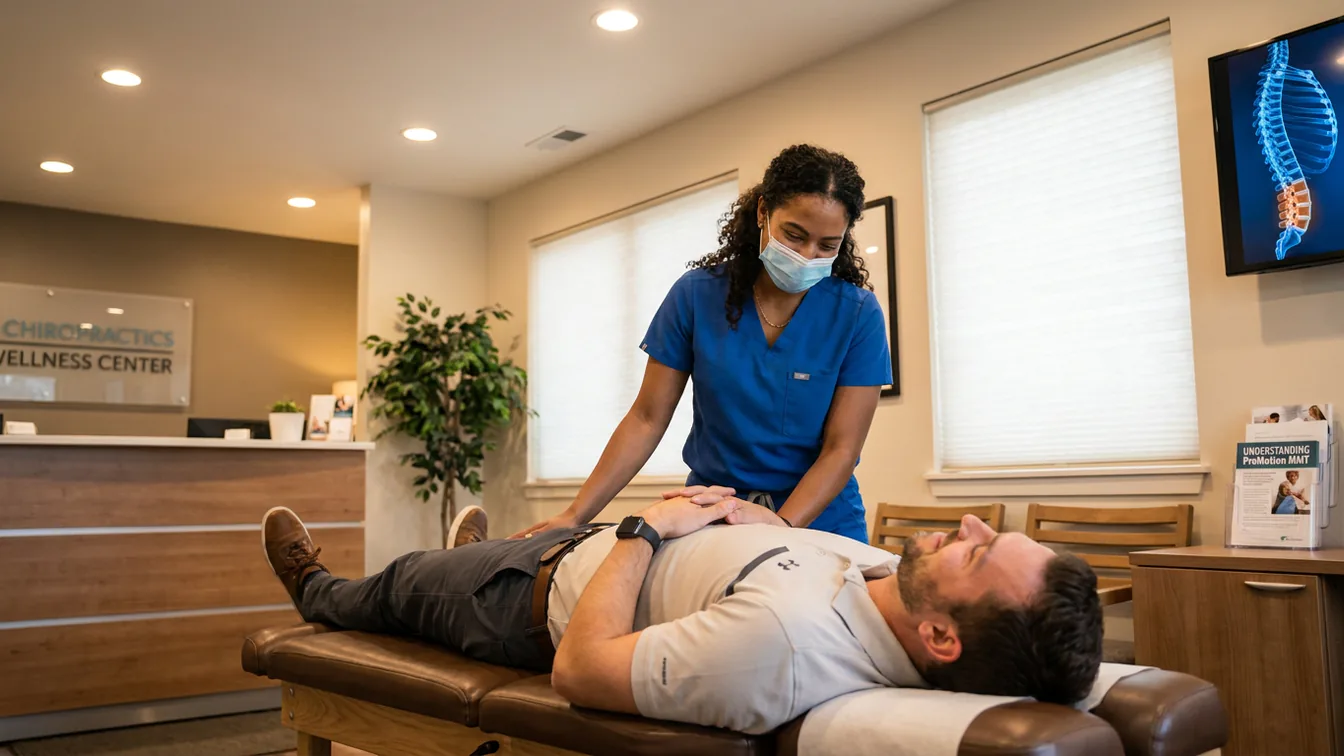
When it comes to innovative healthcare treatments, misinformation can spread faster than facts. ProMotion Manual Muscle Testing (MMT) is a revolutionary approach to diagnosing and treating musculoskeletal conditions, yet many Southern Illinois residents remain hesitant due to persistent myths surrounding this effective therapy. Understanding the truth about ProMotion MMT can help you make informed decisions about your healthcare journey and potentially unlock the pain relief you've been seeking.
ProMotion MMT represents a significant advancement in manual muscle testing techniques, combining traditional assessment methods with modern technology and refined protocols. However, like many innovative healthcare approaches, it has become the subject of various misconceptions that can prevent patients from accessing potentially life-changing treatment options.
Understanding What ProMotion MMT Really Is
Before addressing the common myths that have been debunked by research and clinical experience, it's essential to understand what ProMotion MMT actually involves. This specialized form of muscle testing goes beyond simple strength assessment, evaluating the complex relationships between muscles, joints, and neurological function.
ProMotion MMT practitioners use precise manual techniques to assess muscle function, identifying areas of weakness, imbalance, or dysfunction that may contribute to pain, restricted movement, or other health concerns. The testing process involves applying specific pressure and movement patterns while monitoring the muscle's response, providing valuable information about the body's structural and functional integrity.
Unlike traditional muscle testing that might focus on isolated muscle groups, ProMotion MMT takes a comprehensive approach, examining how different muscle systems work together and influence overall body mechanics. This holistic perspective allows practitioners to identify root causes of problems rather than simply addressing symptoms.
Many Southern Illinois residents have discovered that ProMotion MMT offers insights that other diagnostic methods might miss, particularly when dealing with complex pain patterns or movement restrictions that don't show up clearly on imaging studies.
Myth 1: ProMotion MMT Lacks Scientific Foundation
One of the most persistent myths about ProMotion MMT is that it lacks scientific backing or credible research support. This misconception has been thoroughly debunked by numerous peer-reviewed studies and clinical trials that demonstrate the reliability and validity of properly performed manual muscle testing.
Research published in respected medical journals has shown that trained practitioners can achieve high levels of inter-examiner reliability when performing ProMotion MMT protocols. Studies have documented significant correlations between MMT findings and objective measures such as electromyography (EMG) readings and functional movement assessments.
The scientific foundation of ProMotion MMT rests on well-established principles of neurology, biomechanics, and muscle physiology. When muscles are tested using standardized protocols, they provide measurable responses that reflect the underlying health and function of the neuromuscular system.
Critical to debunking this myth is understanding that ProMotion MMT effectiveness depends heavily on practitioner training and technique standardization. Properly educated healthcare providers who follow established protocols consistently achieve reproducible results that correlate with patient outcomes and other diagnostic measures.
Southern Illinois healthcare professionals who have integrated ProMotion MMT into their practice report that it provides valuable clinical information that enhances their ability to develop targeted treatment plans and monitor patient progress effectively.
Myth 2: Results Are Subjective and Unreliable
Another common misconception suggests that ProMotion MMT results are purely subjective and vary significantly between practitioners or testing sessions. This myth has been debunked through extensive research demonstrating that standardized ProMotion MMT protocols produce consistent, objective results when performed by properly trained practitioners.
The key to reliable ProMotion MMT lies in following precise testing procedures, including proper patient positioning, specific force application techniques, and standardized evaluation criteria. When these protocols are followed consistently, multiple studies have shown excellent inter-rater and intra-rater reliability.
Modern ProMotion MMT incorporates objective measurement tools and standardized grading systems that minimize subjective interpretation. Practitioners learn to recognize specific muscle response patterns and use established criteria to evaluate findings, reducing variability and increasing diagnostic accuracy.
Research has also debunked the notion that ProMotion MMT results are influenced by practitioner bias or patient expectations. Double-blind studies have demonstrated that trained examiners can identify muscle weaknesses and imbalances without knowing the patient's history or symptoms, indicating that the testing reveals objective physiological information.
For Southern Illinois patients considering ProMotion MMT, it's important to seek treatment from certified practitioners who have received proper training in standardized protocols. This ensures that you receive reliable, objective assessment that can guide effective treatment decisions.
Myth 3: ProMotion MMT Cannot Detect Real Physical Problems
Perhaps one of the most damaging myths about ProMotion MMT is the belief that it cannot identify genuine physical problems or structural abnormalities. This misconception has been convincingly debunked by clinical studies demonstrating strong correlations between MMT findings and confirmed pathological conditions.
Research has shown that ProMotion MMT can effectively identify muscle weaknesses associated with nerve compressions, joint dysfunctions, and various musculoskeletal disorders. In many cases, MMT findings have been confirmed through subsequent imaging studies, surgical findings, or other diagnostic procedures.
The technique's ability to detect functional problems often surpasses that of static diagnostic methods. While X-rays or MRIs provide structural information, ProMotion MMT evaluates how muscles actually function during movement and under load, revealing problems that might not be apparent through imaging alone.
Clinical experience has demonstrated that ProMotion MMT can identify muscle inhibition patterns associated with joint restrictions, inflammation, or neurological dysfunction before these conditions become severe enough to show up on conventional diagnostic tests. This early detection capability makes it a valuable tool for preventive healthcare and early intervention.
Many Southern Illinois patients have experienced significant improvements in their conditions after receiving treatment based on ProMotion MMT findings, even when other diagnostic methods failed to identify the underlying problems. These positive outcomes provide compelling evidence that the technique can indeed detect real, treatable physical conditions.
Myth 4: It's Just a Placebo Effect
Skeptics often dismiss ProMotion MMT results as placebo effects, suggesting that any improvements patients experience are purely psychological. However, this myth has been thoroughly debunked by research demonstrating measurable physiological changes following MMT-guided treatments.
Studies using objective measurement tools such as range of motion assessments, strength testing equipment, and functional movement analyses have documented significant improvements in patients treated based on ProMotion MMT findings. These measurable changes cannot be attributed to placebo effects alone.
Research has also shown that ProMotion MMT can identify problems in unconscious or anesthetized patients, clearly demonstrating that the muscle responses being evaluated are genuine physiological phenomena rather than psychological reactions.
The placebo myth is further debunked by the specificity of ProMotion MMT findings. If results were simply placebo effects, we would expect random or generalized improvements. Instead, treatments based on specific MMT findings typically produce targeted improvements that correspond directly to the identified problems.
Long-term follow-up studies of Southern Illinois patients treated using ProMotion MMT protocols show sustained improvements that persist well beyond the timeframe typically associated with placebo effects, providing additional evidence of genuine therapeutic benefits.
The Reality: ProMotion MMT as an Evidence-Based Tool
Now that we've debunked these common myths, it's important to understand what ProMotion MMT can realistically accomplish as part of a comprehensive healthcare approach. When integrated properly into treatment protocols, it serves as a valuable diagnostic and monitoring tool that enhances clinical decision-making.
ProMotion MMT works best as part of a multifaceted approach that may include other diagnostic methods, therapeutic interventions, and ongoing monitoring. It provides unique insights into neuromuscular function that complement information obtained through other assessment techniques.
The most successful outcomes occur when ProMotion MMT is performed by healthcare providers who understand its capabilities and limitations, use standardized protocols, and integrate findings with other clinical information to develop comprehensive treatment plans.
For Southern Illinois residents seeking natural healthcare solutions, ProMotion MMT offers a non-invasive assessment method that can identify functional problems and guide targeted interventions. When combined with appropriate treatments, it can help address the root causes of pain and dysfunction rather than simply masking symptoms.
If you're considering ProMotion MMT as part of your healthcare journey, don't let persistent myths prevent you from exploring this valuable diagnostic tool. The experts at Woodard Wellness Group understand the science behind ProMotion MMT and can help you determine whether this approach might benefit your specific condition. Located at 1245 East Walnut Street, Carbondale, Illinois 62901, our team is committed to providing evidence-based care that addresses your individual needs and helps you achieve optimal health and wellness.